.gif)
.gif)

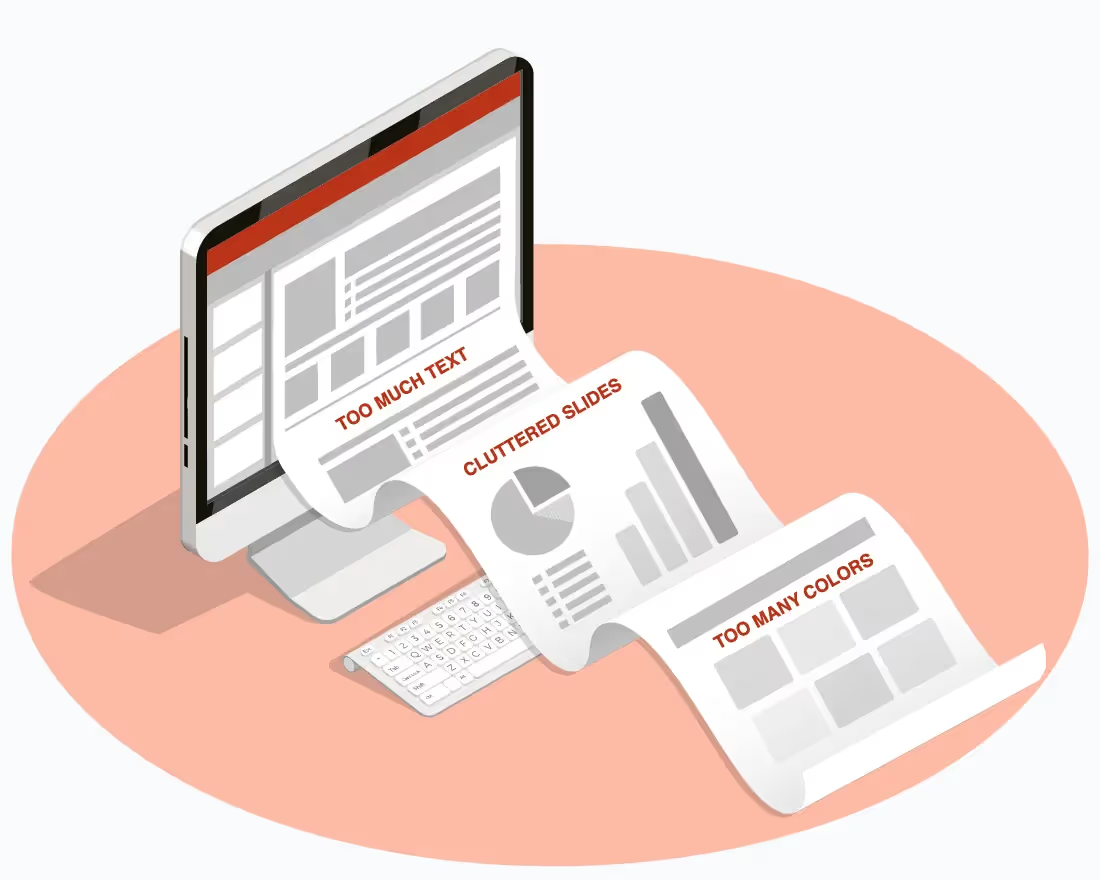
Global teams unlock scale, diversity of thought, and continuous productivity. But when it comes to presentations, they often introduce a different kind of complexity—one that shows up in inconsistent messaging, fragmented design, and inefficient workflows.
The same company story gets told in slightly different ways across regions. Brand guidelines stretch over time. Teams spend hours rebuilding slides that already exist, or searching for the latest version of a deck. What should be a clear, unified narrative becomes a patchwork of interpretations.
AI-powered presentation tools are changing that. They don’t just help teams move faster—they help them stay aligned. And for global organizations, that shift is transformative.
Why global teams struggle with presentations
The challenge isn’t capability, it’s coordination.
In global organizations, presentations are rarely created in one place. Different teams, often separated by time zones and languages, contribute to the same narrative. Without strong systems in place, this naturally leads to drift. Messaging evolves slightly with each iteration, and those small changes compound over time.
Design consistency is another common pain point. Even with brand guidelines in place, execution varies. Fonts, layouts, and visual hierarchy can shift depending on who is building the deck, what template they’re using, or how recently it was updated.
There’s also the issue of efficiency. Teams frequently duplicate work—recreating slides, reformatting content, or manually adapting presentations for different audiences. Add in communication delays across regions, and the process becomes even slower and more fragmented.
The result is not just inconsistent presentations, but misalignment at scale.
How AI improves consistency and collaboration
AI changes the equation by embedding consistency directly into the creation process.
Instead of relying on individuals to interpret guidelines, AI-powered tools apply brand rules automatically. Every slide adheres to approved layouts, typography, and visual standards without requiring manual oversight. This alone eliminates a major source of variation.
But the impact goes beyond design. AI also introduces structure to storytelling. Rather than starting from a blank slide, teams can generate presentations from prompts or predefined frameworks, ensuring that the narrative follows a consistent and logical flow.
Collaboration becomes easier as well. AI can generate first drafts, summarize content, and adapt messaging for different audiences, reducing the need for constant back-and-forth. And because these tools are often connected to centralized content systems, teams are working from the same source of truth—keeping messaging and data aligned across regions.
In effect, AI standardizes not just how presentations look, but how they’re built and communicated.
Best practices for using AI presentations across regions
To fully realize the benefits of AI, global teams need to be intentional about how they implement it.
It starts with defining a clear narrative framework. Whether it’s a sales pitch, a product update, or a quarterly business review, each type of presentation should follow a consistent structure. AI performs best when it has a blueprint to work from, so establishing these patterns upfront is critical.
From there, organizations should invest in a centralized design system. This isn’t just a collection of templates, but a living system of approved layouts, components, and brand elements that AI can enforce automatically. When design standards are built into the tool itself, consistency becomes the default rather than the exception.
AI should also be used to support content creation, not just formatting. Drafting messaging, simplifying complex ideas, and tailoring content for different audiences are all areas where AI can drive meaningful improvements. This ensures that consistency extends beyond visuals into the narrative itself.
Equally important is enabling seamless collaboration across time zones. Teams need the ability to contribute asynchronously, leave contextual feedback, and stay aligned without constant meetings. AI can assist by summarizing updates, highlighting changes, and keeping everyone informed.
Finally, everything should connect back to a single source of truth. Core messaging, key data, and approved content should live in one place, allowing AI to pull accurate and up-to-date information into every presentation. This eliminates version confusion and reinforces alignment.
Managing brand, messaging, and structure at scale
As organizations grow, maintaining consistency becomes exponentially more difficult. What works for a small team breaks down across regions, business units, and use cases.
The solution isn’t more oversight—it’s better systems.
AI allows companies to embed guardrails directly into the presentation workflow. Brand guidelines, messaging pillars, and structural frameworks can be automated, ensuring that every presentation starts from a consistent foundation.
At the same time, these systems can be flexible where it matters. Regional teams can incorporate local insights, market-specific data, and culturally relevant examples without compromising the overall structure or brand integrity.
This approach shifts consistency from something that is enforced after the fact to something that is built in from the beginning.
Beautiful.ai’s Create with AI Workflow for Global Teams
Global teams don’t struggle with presentations because they lack skill. They struggle because they lack systems that scale.
AI-powered presentation tools provide those systems. By combining automation, structured storytelling, and centralized knowledge, they make it easier to maintain consistency, collaborate across regions, and communicate clearly.
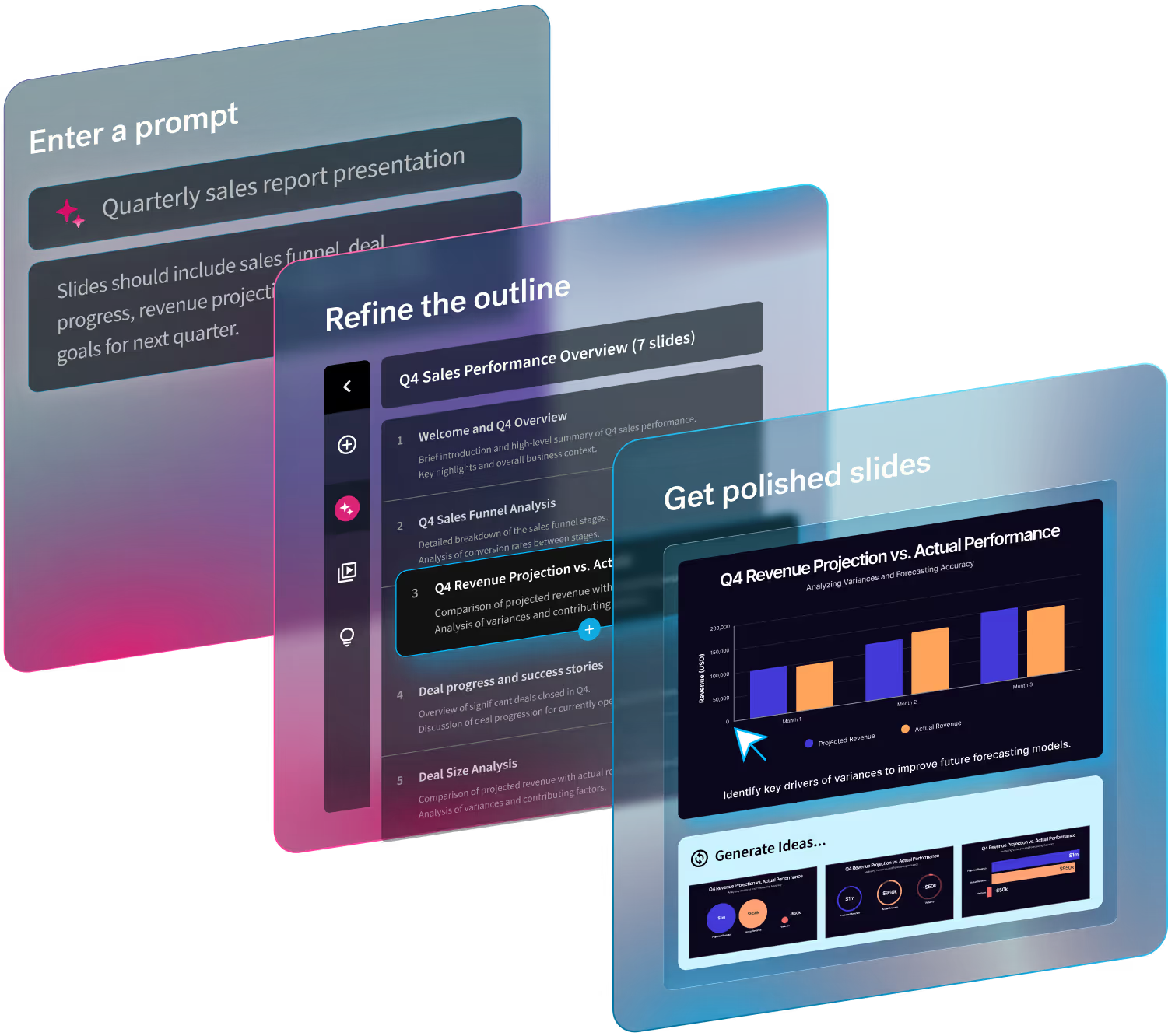
Beautiful.ai’s Create with AI Workflow isn’t just AI that just generates a presentation based loosely on a prompt. It’s AI that helps you create one, all while staying true to your context, your intent, your brand and your asks.
Here’s what AI creation now means with Beautiful.ai for global teams:
- AI that’s faster, smarter, and more flexible
- Slides that reflect what you actually asked for
- The ability to shape the story in stages
- Instant visual ideation and design iteration
- More options, more control, better results
- Getting to work-ready presentations faster than ever
The goal is simple. Beautiful.ai now gets closer to what you envisioned in your head, the first time. Get to polished slides faster, with the right text, layouts, and full visual control.
The result is more than just better slides—it’s stronger alignment across the organization.
AI-powered presentation tools make global alignment easier, faster, and more reliable.



.avif)
.avif)